
Should You Drain Your Pool Before a Hurricane or Leave It Full?
Even after years of dealing with tropical weather, it’s easy to feel confused about the best ways to protect your property. This is especially true when it comes to preparing your inground swimming pool.
Should you drain your pool before a hurricane? This guide will help you answer that question as you prepare your outdoor entertaining area for severe tropical weather.
Is It Necessary to Drain Your Pool Before a Hurricane?
There’s a great deal of confusion about preparing inground swimming pools for impending hurricanes. While it’s easy to find social media posts and message board topics that recommend draining a swimming pool, that’s not necessary.
The pool can accommodate excess water without suffering damage. Pool builders recommend leaving the pool full.
Another reason to leave your pool filled with water is that you’ll spare yourself the cost of replacing all of that water. While partially draining your pool after the storm may be necessary, emptying the pool beforehand will only add to your water usage costs.
During the hurricane, the pool’s water level might start to overflow. That’s something you should expect. Your pool builder will design the decking to carry water away from the pool.
The pool placement and design will also carry water away from your home. You shouldn’t have to worry about rainwater flooding your foundation when you have a good pool design.
Hurricane Prepping: Things to Avoid When Getting Your Pool Ready
There are a few common practices you should avoid when preparing your property for a tropical storm or hurricane. These tips will help you protect your property and reduce the labor involved in your post-storm cleanup process.
Don’t Undertake Landscaping Projects
Homeowners think they’ll have less debris flying around during a hurricane if they do some light landscaping ahead of time. This is a mistake for pool owners since the process can expose pool water to grass clippings, tree leaves, and loose soil. Even professional pool cleaning can’t remove fertilizer from pool water.
Skip the Pressure Washing
Another common practice is to use a professional pressure washing service before or after a hurricane. The water contains chemicals that can contaminate your pool water’s chemistry. Even though professionals know to divert their water away from swimming pools and spas, hurricane rainfall can carry those chemicals toward the pool.
Don’t Risk Your Patio Furniture
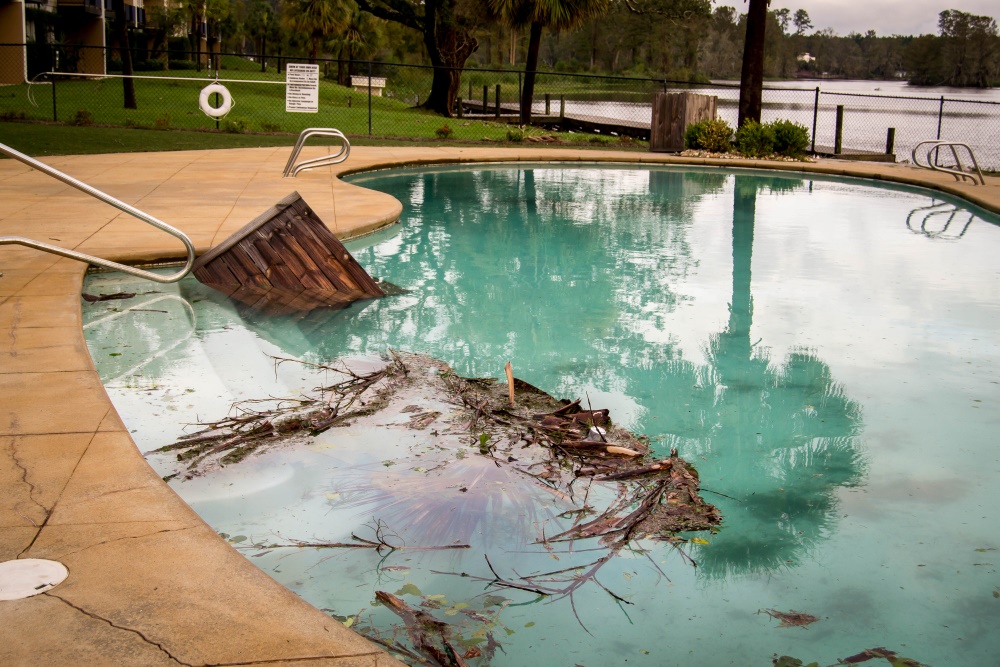
Whether you have wood or metal patio furnishings, they can suffer damage from the chemicals in your pool water. Avoid placing these items in your swimming pool. If you’re concerned about the furnishings blowing away, tie them down or store them in a shed.
Know When to Shock Your Swimming Pool
Should you drain your pool before a hurricane? Another reason to leave your pool water alone is that you’ll want to shock the water. This is a process in which you’ll add granular or liquid shock around the pool’s edges to boost the chlorine content. The extra chlorine in the water will kill more bacteria, algae, and other contaminants.
You should shock the pool on a weekly basis. In addition, this process is necessary at the start of the swimming season and following any severe storm. Some experts recommend shocking the pool before a hurricane arrives to kill contaminants as the storm carries them to your pool.
Once you add the excess chlorine to shock the water, the pool will be unsafe for swimming. To restore the proper pH balance, run the pump for a minimum of eight hours. Test the water chemistry to ensure the chlorine content has dropped back down to normal levels before allowing swimmers to enter the water.
Monitor the Pool Water During the Storm
Keep your swimming pool’s pump running during the storm. As long as there isn’t a power outage, the pump will continuously filter contaminants from your pool water.
Check on the pool whenever possible, paying close attention to the bottom drain and skimmer basket. Remove debris (leaves, twigs, etc.) from the drain and skimmer basket to keep the water circulating.
Post-Storm Cleanup and Safety
Make sure to follow some common safety tips as you plan the post-storm cleanup process.
In addition to wearing proper attire and personal protective gear, this should include assessing the area. You’ll look for downed power lines, uprooted trees, and other physical hazards. Address any damage that could lead to a potential injury before turning your attention to your pool.
As you examine the property around your swimming pool, look for unwanted visitors. Some wildlife is easy to spot. For example, it’s common to find alligators near swimming pools after a storm.
Look for snakes and other predators as well.
You might also find turtles, crabs, frogs, and other wild animals. Even when an animal isn’t normally hostile toward people, the confusion and fear brought about by a hurricane can trigger defensive responses. Avoid confronting them directly.
Drain Your Pool After a Hurricane
Wait for flooding in your yard to subside before dealing with your swimming pool. The soil should absorb most of the water within a few hours. Begin draining the pool. Your goal is to drain enough water to bring the level down to the midway point of the top row of tiles.
If your pool doesn’t have tiles, reduce the level until you can see the top half of the skimmer.
Keep in mind that the drain hose will release water onto your lawn. Make sure to point the hose away from your home and other structures on your property.
Remove debris from your pool before running a second shock treatment. If you use a professional service, removing excess debris will make their work easier and lower your cleanup costs. Once the cleanup is complete, test the water chemistry.
Trust Tampa’s Leading Pool Builders to Install Your Durable Swimming Pool
As you work with Tampa Bay Pools in completing your pool project, we’ll help you build a pool that stands up against Florida’s tropical climate. We’ll design a solid pool frame that withstands high winds and construct a shell that can hold the extra water that hurricanes leave behind. Contact us to request an estimate today!